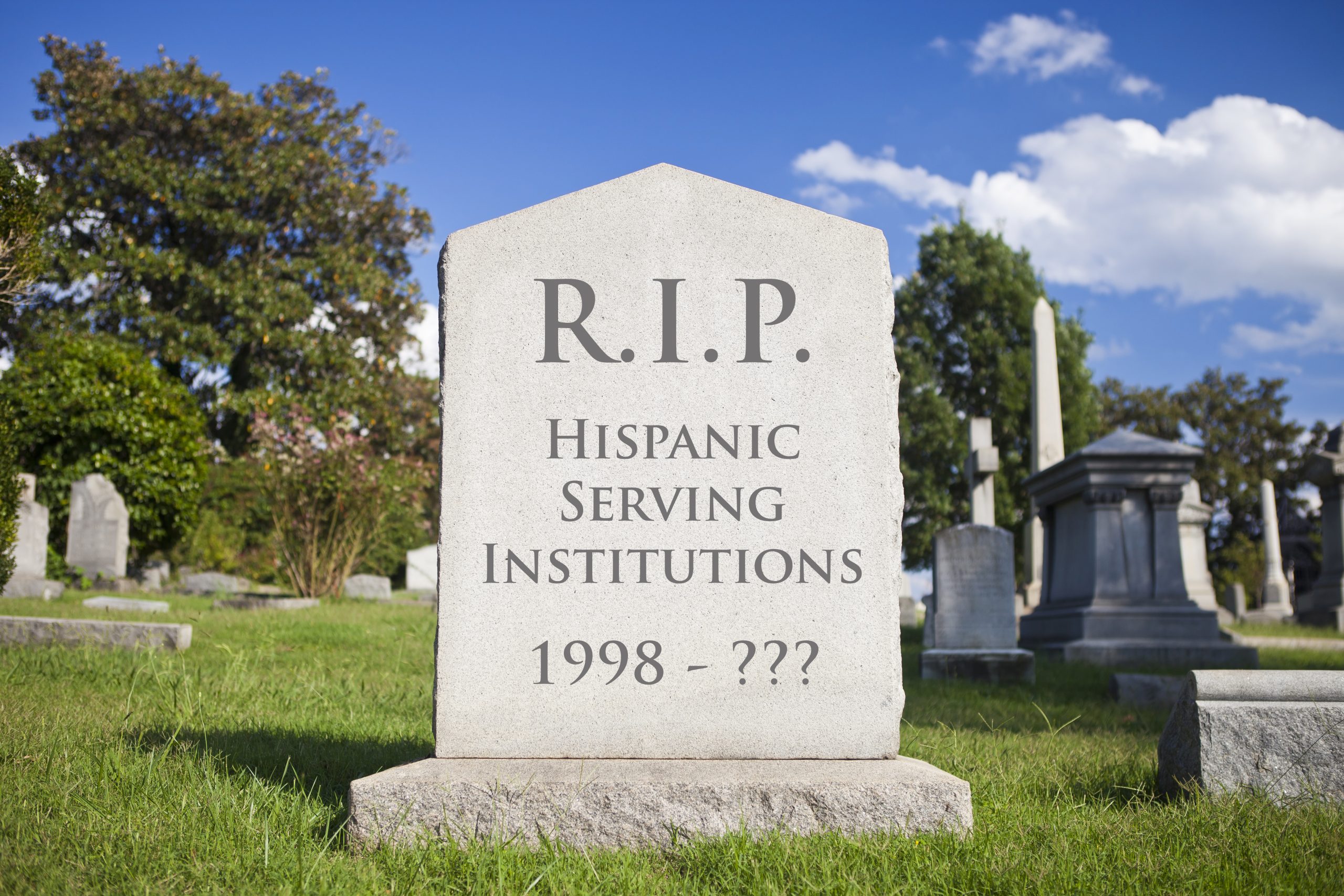
The Justice Department’s refusal to defend Hispanic Serving Institutions against anti-affirmative action groups signals the likely end of nearly three decades of progress.
For nearly 30 years, the federal government has supported Hispanic-Serving Institutions (HSIs)—colleges and universities with at least 25 percent Hispanic enrollment—through targeted grants. Now, that legacy is under threat. President Trump’s Department of Justice has declined to defend the program against a lawsuit filed by the state of Tennessee and Students for Fair Admissions, a group well known for challenging affirmative action programs and policies nationwide. In its filing, the DOJ argued that the program is unconstitutional because of its race-based classification, effectively aligning with the opposition and jeopardizing the very existence of the HSI designation and the resources it secures.
This decision is only the latest step in a broader campaign to roll back decades of progress for marginalized communities. Diversity, Equity, and Inclusion (DEI) offices across the federal government—including agencies like NASA and those within the Department of Defense that have long championed DEI—have seen their funding quietly eliminated, and in the most Machiavellian way possible: by disappearance. Entire DEI websites have vanished. Phone lines have gone dark. Emails bounce back without alternatives. The result is a silent but sweeping erasure of programs that have long supported access and opportunity.
The private sector, particularly government contractors in defense and intelligence, has not been spared. Many companies that championed diversity in hiring and community partnerships are now pressured to scale back or even dismantle those initiatives or risk losing lucrative federal contracts. Most, understandably, have done so, uncertain how to navigate this new policy landscape without jeopardizing their business models.
For organizations like Great Minds in STEM (GMiS), which is NOT a so-called “DEI organization,” these developments pose existential challenges. We serve students of all races as outlined in our mission, and we take pride in being a source for a broad spectrum of talent to our sponsors. We have forged rich partnerships with HSIs because students at those institutions – again, from all races – are the ones who benefit most from the programs and platforms we offer. But this work we do in partnership with our sponsors is now in jeopardy. And we are not alone. Nonprofits across the nation are struggling to uphold their missions in an increasingly hostile environment, and the students we serve.
Critics of DEI often dismiss such programs as unnecessary, yet the reality is clear: the students and professionals who benefit from them—whether K–12 students exploring STEM, undergraduates pursuing degrees, or professionals recognized for excellence—are Americans who might otherwise be denied critical opportunities and awareness. While the aspiration of a colorblind society remains noble, and a world where one’s character trumps one’s skin color should be everyone’s goal, dismantling the very programs that have brought us closer to that ideal without offering viable alternatives to replace them is short-sighted and damaging.
Despite these challenges, GMiS and other non-profits I suspect will continue to pursue our missions and evolve and adapt as best we can. Our 2025 Conference, “STEM4ALL,” will go forward with pride October 2–4 in San Diego, California. We are grateful to the sponsors who remain with us during these turbulent times and look forward to reconnecting with those who understandably had to pull back in this new environment. Most importantly, we remain committed to the students, scholars, and professional award winners who benefit from these programs to access opportunities they deserve.
Peter Mellado
Executive Director
Great Minds in STEM